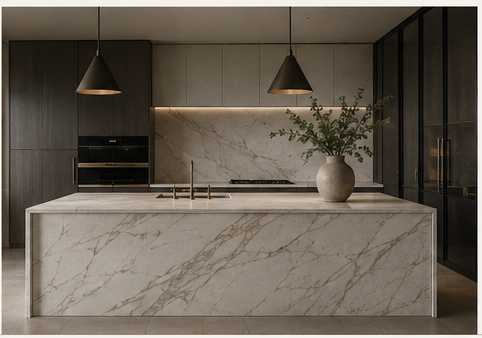
Granite · Winnipeg, Brandon & Winkler
Granite countertops cut from stone that took millions of years to form.
Every slab we fabricate is 100% natural stone, and no two are alike. In stock, fabricated in-house, most installed within five days.
The Material
Granite on its own terms.
Granite countertops start with something no engineered surface can imitate: rock formed deep in the earth, under pressure and heat, over geologic time. At Granite Dynasty, in stock, fabricated in-house, most installed within five days describes a process, not a promise — real quarried material, cut and finished at our own facility, on a schedule you can plan a kitchen around.
If you’re comparing options, our quartz countertops page covers the engineered, non-porous side of the category.
Geology
What makes granite different.
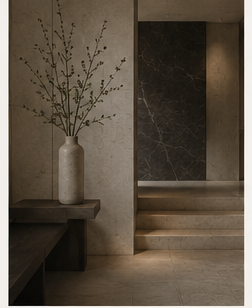
Granite is an igneous rock, crystallized from molten material far below the earth’s surface. That process is what gives each slab its individual pattern of quartz, feldspar, and mica — the same forces that produced sweeping veins in one block might produce tight, uniform speckling in the block quarried beside it.
No fabricator, including us, can reproduce a granite pattern on demand. When you choose a slab, you are choosing a one-of-a-kind piece of the earth’s history, not a batch-produced material.
This matters most in larger installations — an island, a waterfall edge, a long perimeter run — where the movement of the stone becomes part of the room’s character rather than a repeating pattern.
Performance
Heat resistance & durability.
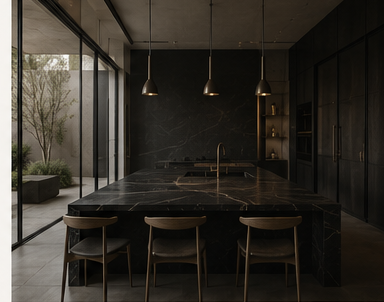
Because granite is quarried rock rather than a resin-bound composite, it tolerates direct contact with hot cookware far better than engineered quartz, which can discolour or crack under sustained heat. Granite can take a hot pan straight from the stove in a way quartz simply is not built for — though we still recommend trivets as everyday practice, since thermal shock can affect any stone over time.
Granite also ranks among the hardest countertop materials available, resisting scratches from knives, cookware, and daily traffic. Combined with its heat tolerance, it holds up to the kind of hard use a working kitchen actually sees.
The Comparison
Granite vs. quartz.
There is no universally better choice — only different strengths suited to different priorities. We fabricate both, and we would rather point you to the right one than sell you the wrong one.
Granite
Quartz
If uniqueness, permanence, and heat performance top your list, granite is the stronger fit. If you want the lowest-maintenance surface with the most uniform pattern, see our quartz countertops page.
Stewardship
Sealing & care.
Honesty matters here: granite is a porous natural stone, and it performs best with periodic sealing. A properly sealed surface resists staining from oil, wine, and everyday spills, and most granite only needs resealing on an occasional basis — not constantly. This is the trade-off for the uniqueness and heat tolerance granite offers.
The Range
Colours & patterns.
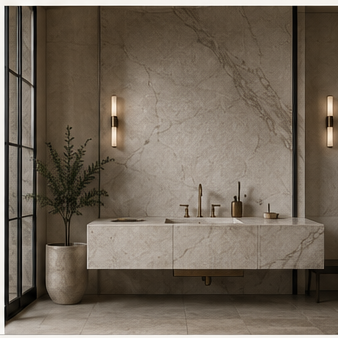
Granite runs from deep, dramatic darks to warm, sunlit neutrals — and every slab within a colour family still carries its own movement.
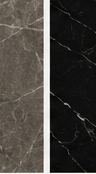
Black Galaxy
A dense, near-black stone flecked with fine gold and copper mineral deposits.
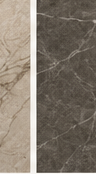
Absolute Black
A uniform, deep black finish that reads as almost architectural in modern kitchens.
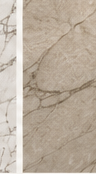
Colonial White
A warm, speckled stone with soft cream and grey tones suited to traditional interiors.
These names illustrate the breadth of the category — dark and dramatic, finely speckled, warm-toned — rather than a confirmed slab list. View the gallery for completed installations across the range.
The Process
Fabricated in-house. Most installed within five days.
We fabricate granite in-house rather than outsourcing cutting and polishing to a third party. That control is what lets us work from in-stock slabs and hold a five-day timeline once templating is complete.
See current stock in person and choose the individual slab for your space.
Exact measurements captured in your kitchen, not estimated from drawings.
Precision fabrication under one roof — stone, equipment, and crew already in place.
Fitted, sealed, and walked through with your care schedule in hand.
Applications
Where granite excels.
Density, heat tolerance, and one-of-a-kind character make granite a strong fit well beyond a single kitchen counter.
Where the stone’s natural movement becomes a focal point — see our kitchen countertops page.
Granite’s heat resistance holds up to sustained exposure better than engineered alternatives.
Detailed further on our bathroom countertops page.
Where a single dramatic slab makes a statement piece on its own.
Does granite need to be sealed?
Yes. Granite is a porous natural stone, and periodic sealing helps it resist staining. Our team recommends a sealing schedule based on the specific granite you select.
Is granite more expensive than quartz?
Cost varies by slab, colour, and project scope for both materials. Rather than quote a general figure, we provide project-specific pricing after a consultation.
How long does installation take?
For most jobs, templating to installed runs about five days. It is a target rather than a guarantee, and it holds within roughly 150 km of Winnipeg — the work never leaves our Springfield shop, so nothing sits waiting on a third-party fabricator. Further out we still fabricate and install; we just quote a real date instead of defaulting to five. Templating itself is scheduled once you have chosen your slab.
How much should a granite countertop cost?
The stone is one line on the quote, and rarely the one that moves it most. Square footage sets the base, then the slab itself — granite varies more than quartz, because rarity in quarried stone is real rather than a product tier. After that it is the edge profile, the number of cutouts, how many seams the run needs, and whether an old top has to come out first. A kitchen with an undermount sink, a cooktop cutout and a mitred edge lands well above the same square footage with a drop-in and an eased edge. Send us rough dimensions and we will come back with a real range.
What’s the downside to granite countertops?
Sealing. Granite is quarried and porous, so it needs a sealer applied periodically to stay stain-resistant, and how often depends on the slab — density varies from one granite to the next. Two smaller trade-offs follow from the same fact: no two slabs match, which is the appeal for most people and a problem if you need a long run to read consistently; and darker granites show water spots and fingerprints more than a honed surface does. Heat is where it goes the other way — granite takes a pan straight off the burner, which engineered stone will not.
The Natural Stone Range
The other three, and how they differ.
All four are quarried rather than engineered, sourced slab by slab, and cut at our Sunnyside shop. Compare them side by side if you are still deciding.
Granite Dynasty
Natural. Timeless. Enduring.
Granite is not a trend — it is a material that has anchored serious architecture for centuries, and it will outlast the kitchen it is installed in. If you are ready to see what a genuinely unique slab looks like in your space, our Winnipeg-area team is ready to help.
Or call 204 791 1999 — Monday to Friday.