Quartz · Winnipeg, Brandon & Winkler
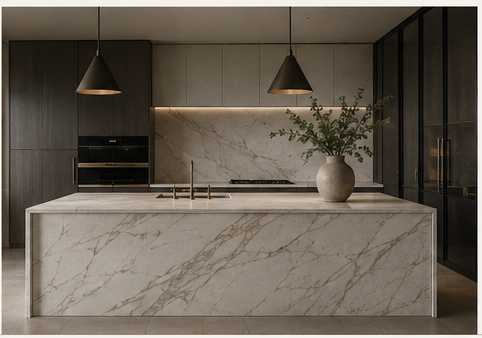
Quartz countertops in Winnipeg — non-porous engineered stone that never needs sealing.
Quartz countertops are roughly 90% crushed natural quartz bound with resin, which is why they hold up to a working kitchen without the maintenance quarried stone asks for. In stock, fabricated in-house, most installed within five days.
The Material
Quartz on its own terms.
Quartz countertops are an engineered stone product, not a slab cut from the earth. Because the surface is non-porous, it resists staining, scratching, and bacterial growth in ways porous natural stone cannot match without regular treatment — which is why it has become the workhorse material for kitchens and bathrooms across Manitoba.
Every slab is cut and finished at our own shop in the RM of Springfield, on the eastern side of Winnipeg, rather than sent out to a third-party fabricator. That is why a five-day install is realistic within roughly 150 km of Winnipeg: the work never leaves the building, so nothing sits waiting on somebody else’s schedule. Past that radius we still fabricate and install — we just quote you a real date instead of a default one.
Engineering
What makes quartz different.
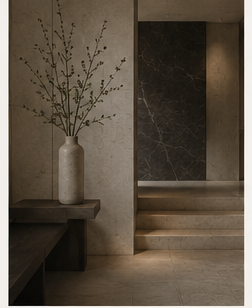
Quartz is manufactured, not quarried. Producers crush natural quartz crystal and bind it under pressure with polymer resin and pigment — industry slabs run roughly 90 percent crushed quartz by weight, with the remaining 7 to 10 percent resin, pigment and additives. That ratio is what gives the material its two defining properties: it is hard, and it is consistent.
Quartz the mineral sits at 7 on the Mohs hardness scale, above steel, above a knife blade, and above most of what gets dragged across a kitchen counter. Granite typically falls between 6 and 7, marble between 3 and 5. That is the reason quartz shrugs off scratching that would mark a softer natural stone.
The manufacturing process also controls colour and pattern from batch to batch, so quartz slabs from the same production run appear more uniform than natural stone, where every slab is genuinely one of a kind.
That predictability is a deliberate trade-off, and one many homeowners choose on purpose.
Performance
Heat resistance & durability.
Heat is the one limit quartz genuinely has. The resin that binds the slab softens and discolours long before the mineral does, and manufacturers generally rate engineered quartz for sustained exposure up to roughly 150°F (65°C). Everything else — spills, scratches, stains, standing water — it handles better than almost any other countertop material, on nothing but warm water and mild soap.
What matters is duration, not just peak temperature. A mug transfers very little heat through its base and does no harm. A cast-iron pan sitting on the counter for two minutes transfers a great deal.
| Set down on quartz | Approximate temperature | Use a trivet? |
|---|---|---|
| Mug of coffee or a warm plate | Brief contact, low transfer | No |
| Bakeware straight from the oven | 350–450°F (175–230°C) | Yes |
| Pan straight off the burner | 400–500°F (200–260°C) | Yes |
| Slow cooker or electric skillet, running | Lower peak, hours of exposure | Yes — heat pad |
Ratings vary by manufacturer and series. We will confirm the specific figure for whichever line you choose before you buy.
The Comparison
Quartz vs. granite.
Both are premium, long-lasting countertop materials, and the honest answer to which one costs less is that it depends on the specific slab. Pricing for both varies by colour, pattern rarity, and availability, and mid-range quartz and mid-range granite frequently land in a comparable price range. Where they differ is maintenance, hardness and character.
Quartz
Granite
Neither material is objectively the better value; the right choice depends on whether you prioritize zero-maintenance consistency or the one-of-a-kind character of quarried stone. Our granite countertops page covers that natural-stone side in more depth.
Stewardship
Sealing & care.
Sealing is the one maintenance step quartz never asks for, at any point in its life. There is no resealing schedule to track, no annual product to buy, and no test to run on the surface. Daily cleaning is warm water and mild soap. The one habit worth building is protecting the surface from sustained direct heat.
The Range
Colours & patterns.
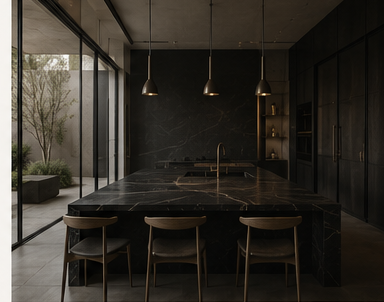
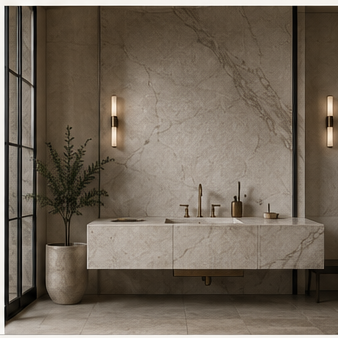
Colour and finish come down to how the space will be used and lit. Lighter, more uniform patterns tend to open up smaller kitchens and bathrooms, while darker or more heavily patterned quartz can anchor a larger kitchen with more visual weight. Finish matters too: polished delivers the most reflective look, while honed and textured finishes soften glare and hide fingerprints more effectively in high-traffic kitchens.
We fabricate quartz from Cambria, HanStone and LX Hausys (Viatera). HanStone is worth knowing by name — it is manufactured in London, Ontario, which makes it one of the few quartz surfaces in a Manitoba kitchen that was made in Canada rather than shipped across an ocean, and it carries a limited lifetime warranty from the manufacturer on top of our own workmanship. Each line carries its own colour range, warranty and slab dimensions, and we will walk you through the differences against your kitchen rather than a spec sheet — including which colours we hold in stock and which are ordered in.
LX is exclusive to Granite Dynasty in Manitoba. No other fabricator in the province carries the line, so the LX colours you see on our showroom floor are not something you can take down the road and price against a competitor — and the porcelain we keep in stock comes from the same manufacturer. If you are choosing between the two, the practical split is heat and sunlight: porcelain takes a pan straight off the element and holds its colour outdoors, while quartz gives you a far wider colour range for a normal indoor kitchen.
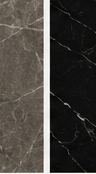
Deep Charcoal
A near-solid dark tone with minimal flecking, engineered for a consistent read across large islands and waterfall edges.
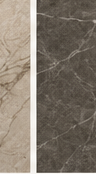
Soft Grey
A light, evenly toned pattern that helps smaller kitchens and vanities feel more open under everyday lighting.
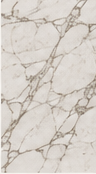
Calacatta-Inspired
Manufactured veining that echoes marble’s movement, reproduced with the batch-to-batch consistency natural stone can’t match.
These names illustrate the breadth of the category rather than a confirmed slab list. View the gallery for completed installations across the range.
Detailing
Edge profiles.
The edge profile is the shaped finish on the exposed front of the slab, and it moves both the look and the price of a quartz countertop more than most people expect. Five come up most often:
Our edge profiles page shows each one at full size.
The Process
Fabricated in-house. Most installed within five days.
Cutting and polishing happen at our Springfield, Manitoba facility rather than at a third party, and the material is already on the floor when you choose it — so nothing waits on a slab shipment before fabrication can begin.
Visit our Winnipeg showroom to see quartz slabs and colours in person.
Slabs are templated to your exact cabinet layout before a single cut is made.
Cut and edged in our own shop, keeping quality consistent from first cut to final seam.
Installed by our own crews, not subcontractors.
Applications
Where quartz excels.
Quartz performs well anywhere a surface needs to withstand heavy daily use without special care.
The most common application, and the most heavily used surface in the kitchen. See our kitchen countertops page for more.
Consistent patterning across long runs, without the seam-matching challenges of natural stone.
Quartz’s consistency makes it a strong choice where the pattern needs to read continuously down the side of an island.
Non-porous surface resists moisture, cosmetics, and cleaning products. See our bathroom countertops page for more.
How much should you pay for a quartz countertop?
It depends on six things, and only one of them is the stone: square footage, the colour and series you choose, the edge profile, how many cutouts the layout needs, how many seams the run requires, and whether an old top has to come out first. Two kitchens of identical size can land a long way apart because one has an undermount sink, a cooktop and a mitred edge and the other has a drop-in and an eased edge. Send us rough dimensions and we will come back with a real range rather than a number we would have to walk back.
What are the negatives of quartz countertops?
Quartz is not without trade-offs. It is heat-sensitive compared to natural stone, so direct contact with hot cookware can damage the resin binder if trivets aren’t used. Its manufactured pattern, while consistent, lacks the one-of-a-kind veining of natural stone, which some homeowners find less distinctive. Quartz slabs are also heavy and require professional templating and installation, and seams can be more noticeable on very large or light-coloured runs than on some natural stones. It is not rated for outdoor use either — sustained UV can fade the pigment.
How hot is too hot for a quartz countertop?
Manufacturers generally rate engineered quartz for sustained exposure up to roughly 150°F (65°C), and the resin binder is what sets that ceiling rather than the mineral. A mug of coffee or a warm plate is fine — the base transfers very little heat and the contact is brief. A pan straight off the burner at 400 to 500°F, bakeware out of the oven, or a slow cooker running for hours all need a trivet or heat pad. Damage from heat shows up as discolouration or a dulled patch, and it is permanent.
Which is cheaper, quartz or granite?
There is no fixed answer. Pricing for both materials varies by colour, pattern rarity, and availability, and mid-range quartz and mid-range granite frequently land in a comparable price range. The right choice comes down to whether you prioritize zero-maintenance consistency or the one-of-a-kind character of quarried stone, not a blanket cost difference between the two categories.
How long do quartz countertops last?
Decades, and most manufacturers back the material with a limited lifetime residential warranty. There is no wear-out mechanism in normal use: the surface does not need sealing, does not absorb, and does not soften. What ends a quartz countertop early is almost always a single event — a heat mark, a chip at an unsupported overhang, or a renovation that changes the cabinet layout.
Granite Dynasty
See the slab before you buy it.
Bring your dimensions to our Winnipeg showroom and we will price the real layout — edge profile, cutouts, seams and all.
Or call 204 791 1999 — Monday to Friday.